
AC Condenser Repair
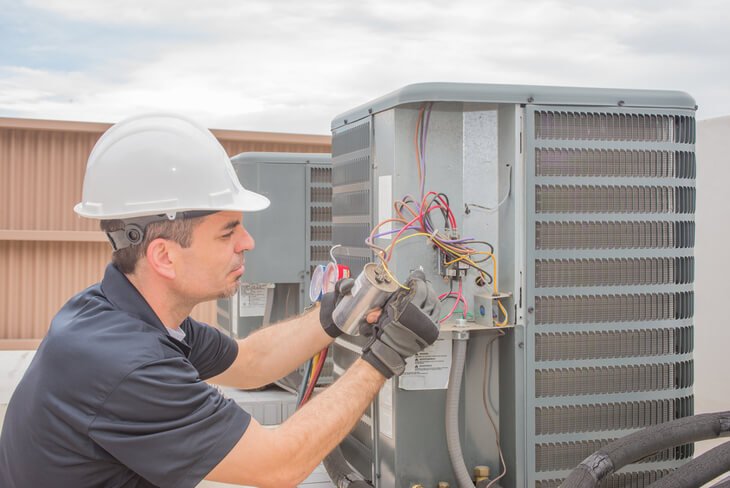
What the AC condenser does
Cool Kings Heating & Air handles AC condenser repair for homes in Buda, Kyle and across the greater Austin area, and the first question we usually hear is whether the outdoor unit can be fixed at all. Most of the time it can. The parts that fail most often are small electrical parts a technician can test and replace in one visit.
The condenser is the outdoor half of a central air conditioning system or heat pump. Indoors, the evaporator coil pulls heat out of your rooms. Refrigerant carries that heat outside, where the compressor pressurizes it, the condenser coil releases it and the fan pushes it into the yard. If any piece of that chain stops, the house stops cooling, even while the indoor blower keeps running.
If your outdoor unit is humming, sitting silent or blowing warm air, call (512) 318-7212 or request service online. Same-day appointments are often available.
Common AC condenser problems
Most condenser issues trace back to four parts, plus the compressor covered further down. Before naming the problem, our technician checks the power supply, tests the capacitor, measures what the fan motor and compressor draw, inspects the coil and reads the system pressures.
Capacitor
The capacitor gives the compressor and fan motor the jolt they need to start. When it weakens, the unit hums but the fan sits still or turns slowly. Heat is hard on capacitors, which is why they are the part that fails most often on outdoor units. The fix is usually quick. The real work is confirming the capacitor caused the problem and was not just the first thing to give out.
Contactor
The contactor is the switch that sends power to the compressor and fan when the thermostat calls for cooling. Its contact points pit and burn after years of cycling, and ants like to nest between them. A stuck contactor leaves the outdoor unit running nonstop. A failed one means it never starts.
Condenser fan motor
The fan on top pulls air across the coil so the system can shed its heat. A worn motor runs hot, squeals or stops. Without that airflow, pressure climbs fast and the compressor can shut off on overload, so a failing fan motor is worth fixing before it takes a bigger part down with it.
Coil leaks and damage
The condenser coil is copper or aluminum tubing wrapped in thin metal fins. Corrosion, hail, string trimmers and vibration can all cause leaks. Can a condenser coil be repaired? A small leak in a spot the technician can reach can sometimes be brazed, then the system is pressure tested, evacuated and recharged. A leak buried inside the coil, or several at once, usually means replacing the coil or the outdoor unit. Bent fins are a smaller problem that a fin comb can straighten.
Signs your condenser needs repair
- The outdoor unit hums, but the fan on top does not spin
- Vents blow room temperature or warm air while the system runs
- The outdoor unit will not start, or will not shut off
- Clanking, rattling, grinding or screeching from the cabinet
- Ice on the refrigerant lines, or oily residue on the coil or fittings
- The AC breaker trips more than once
A clogged filter, a frozen indoor coil or a thermostat fault can look the same from inside the house, so a full AC repair diagnosis checks both the indoor and outdoor sides of the air conditioning system before anyone replaces a part.
When to repair or replace an AC condenser
An AC condenser can be repaired in most cases. Capacitors, contactors, fan motors and wiring are all replaceable, and fixing them restores normal performance. Replacement starts to make sense when the expensive parts fail on an older system.
Age comes first. There is no fixed lifespan for an outdoor unit, since maintenance, installation quality and run time all matter. ENERGY STAR advises having heating and cooling equipment evaluated by a professional once it is more than 10 years old or no longer keeping the house comfortable (ENERGY STAR).
The refrigerant type matters. Older systems often run on R-22, and U.S. production and import of R-22 ended in 2020 under the EPA phaseout of HCFCs (EPA). Those systems can still be serviced, but a major leak on an R-22 system is usually where repair stops making financial sense.
Repeat breakdowns are a signal. Some homeowners use the $5,000 rule as a quick check: multiply the system's age in years by the repair quote in dollars, and if the result tops 5,000, price out a replacement. It is a rule of thumb, not a verdict, and it ignores efficiency and comfort.
When replacement is the better call, we lay out both options side by side and walk you through HVAC installation, including York equipment. When the repair is the smart move, we tell you that too.
What drives the cost of a condenser repair
Cost depends on which part failed and whether the job involves refrigerant. A capacitor or contactor sits at the low end and a fan motor costs more. Coil leaks and compressors sit at the top, because they add recovery, brazing and recharging. Cool Kings uses flat-rate pricing with no hourly fees, so you know the price before any repair starts.
AC compressor repair and replacement
The compressor sits inside the condenser cabinet and pumps refrigerant through the whole AC system. A compressor that will not start is often not a compressor problem at all. A weak capacitor, a burned contactor or a loose wire can keep a healthy compressor from starting, and those are ordinary repairs, so we test the electrical side before calling a compressor dead.
Signs of a truly failed compressor include a breaker that trips every time the unit starts, a loud clunk or grinding inside the cabinet, repeated shutoffs on overload, and electrical tests that show a shorted or grounded winding. Replacing a compressor alone means opening and recharging the sealed system. On a newer system still under its parts warranty, that often makes sense. On an older one, a new outdoor unit or matched system usually deserves a look.
Most compressors fail from long-term stress: running hot with a dirty coil or weak fan, running low from a slow leak, or hard starts from worn electrical parts. Fixing the small parts early protects the big one. You may also have heard of the three minute rule. After the air conditioner shuts off, its pressures need a few minutes to even out before the compressor restarts, and many thermostats build in that delay. If the unit keeps shutting down, leave it off rather than switching it on and off, and call.
Why Central Texas condensers work harder
A condenser in Buda or Kyle runs long hours from late spring well into fall, often through stretches of 100 degree afternoons. It has to dump heat into air that is already hot, which keeps temperatures and pressures high and wears on capacitors, contactors and fan motors. Dust and grass clippings pack into coils here, which makes the compressor work even harder.
That is why spring HVAC maintenance pays off in this climate. A tune-up checks the capacitor, electrical connections, fan motor, coil and compressor, the same parts that tend to fail once summer heat settles in. Replacing a weak capacitor in April beats waiting for it to quit in July.
What homeowners can safely check
A few checks are safe to do before you call, and sometimes they solve the problem.
- Make sure the thermostat is set to cool and set below the room temperature.
- Check the breaker panel for a tripped AC breaker. Reset it once. If it trips again, leave it off.
- Replace a dirty air filter. The U.S. Department of Energy says a clean filter can lower an air conditioner's energy use by 5 to 15 percent (DOE Home Cooling 101).
- With the system off at the thermostat and breaker, clear leaves, grass and debris from around and on top of the outdoor unit, and keep plants trimmed back.
- Listen to the outdoor unit and note whether it hums, clicks or stays silent.
Stop there. Do not open the electrical panel on the condenser, touch the capacitor or try to add refrigerant. Capacitors can hold a dangerous charge with the power off, and the EPA requires technicians who service equipment that could release ozone depleting refrigerants to be certified under Section 608 of the Clean Air Act (EPA).
Condenser service in Buda, Kyle and the Austin area
Cool Kings is a family-owned company based in Buda, started in 2015 by father and son Terry and Corey Lutrick. We work on any make and model, explain what failed in plain language and give you the price before work begins. Homeowners in Buda, South Austin and nearby Hays County towns, including the families we serve in Kyle, TX, can usually get a same-day appointment. Call (512) 318-7212 or request a quote online.
Get a Quote
Trending Articles