
Furnace Blowing Cold Air or Won’t Light? Igniter, Flame Sensor and Pilot Problems Explained
When a furnace blows cold air, it’s usually doing one of two things: running the blower because a setting told it to, or running it after a safety control shut the burners off. The usual suspects are a thermostat fan set to On, a normal warm-up delay, a clogged filter or an ignition part that won’t light.
Some take two minutes to fix. The rest need a tech. One rule comes first: if you smell gas, leave the house and make your calls from outside.
Why is my furnace blowing cold air?
A furnace blows cold air when the blower is moving air but no burner flame is heating it. Carrier names a thermostat fan set to On instead of Auto as the most common cause. Other causes include a normal startup delay, a limit switch tripped by poor airflow, and an igniter, flame sensor or pilot that never lights.
A gas furnace starts in a set order: inducer motor, then igniter, then gas valve, as Carrier describes it. Once the burners light, many furnaces hold the blower for about 30 to 60 seconds so the heat exchanger can warm up. When a step fails, the system stops, and where it stops points to the cause.
What the startup sequence tells you
| What you notice | Likely cause | Who handles it |
|---|---|---|
| Cool air for the first minute, then heat | Normal blower delay | Nothing to fix |
| Fan never stops between cycles | Thermostat fan set to On | You |
| Small motor hums, no glow, furnace gives up | Igniter, pressure switch or condensate drain | Technician |
| Burners light for a few seconds, then go out | Dirty or failing flame sensor | Technician |
| Heat for a while, then unheated air with the fan running | Limit switch tripped by a clogged filter | You first, then a tech |
Check the thermostat settings first
Thermostat settings are the first thing to check when the vents aren’t putting out warm air. With the fan set to On, the blower runs nonstop and pushes room-temperature air between heating cycles. Switch the fan to Auto, confirm the mode says Heat and set the temperature 3 to 5 degrees above the room, as Carrier suggests.
Carrier also notes that a programmable thermostat’s schedule can shift after a daylight saving time change or a power outage. Daylight saving time ends the first Sunday in November, right as heating season starts in Central Texas, so a clock that’s an hour off can bring the heat on late. A blank screen with fresh batteries may call for thermostat repair.
A clogged air filter can shut the burners off
A clogged air filter makes a furnace blow unheated air by starving it of airflow. The heat exchanger runs too hot, the high limit switch shuts off the burners and the blower keeps running to cool the furnace down. Bryant and Carrier both describe it: heat for a while, then cooler air.
If you can’t see light through the filter, replace it. ENERGY STAR suggests checking filters once a month and notes that airflow problems can cut a system’s efficiency by up to 15 percent. Open closed vents and clear the return grilles too. Cycling on and off every few minutes is short cycling, a separate problem. Our post on why a furnace short cycles covers it.
Igniter, flame sensor and pilot light problems
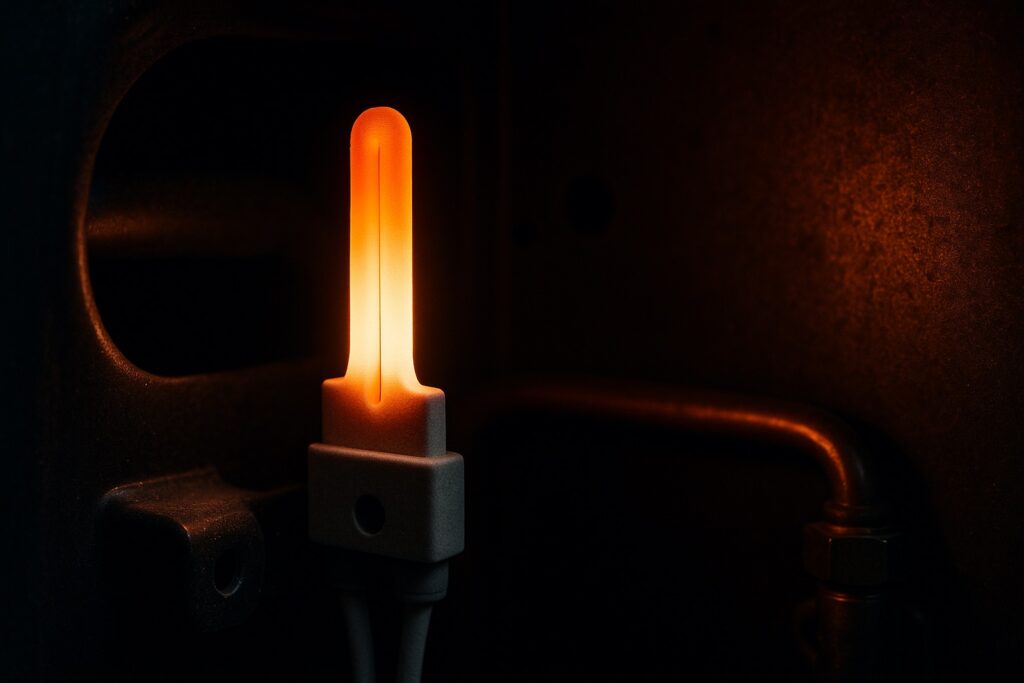
Ignition trouble is the next suspect when the settings and filter check out. Most modern furnaces use a hot surface igniter to light the gas and a flame sensor to prove the flame is there, while older furnaces use a standing pilot light. When one fails, the burners never light or shut off within seconds.
Watch from outside the cabinet:
- No glow at all. The inducer runs, but the igniter never glows. Think cracked igniter or a pressure switch that won’t close.
- Flames for a few seconds. Carrier and Bryant both point to a dirty flame sensor that can’t detect the flame.
- No pilot flame on an older furnace. A pilot that won’t stay lit often means a faulty thermocouple.
After a few failed tries, most furnaces lock out and blink a code on the control board. Bryant notes those codes vary by model, so write down the blink pattern for your tech, and don’t keep restarting a furnace that won’t light.
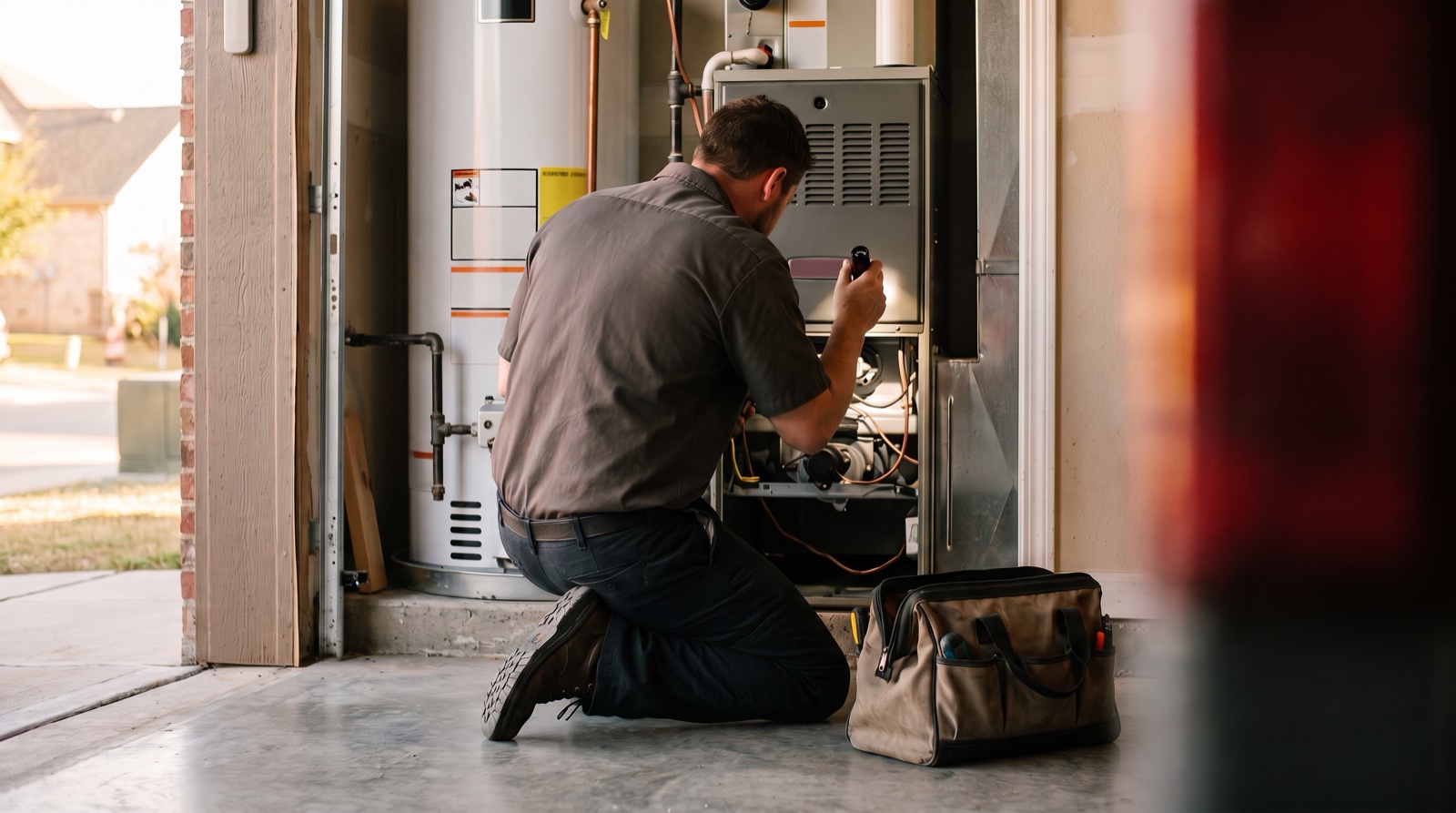
Central Texas timing makes ignition problems show up all at once. NOAA’s 1991 to 2020 normals for Austin’s Camp Mabry station show zero heating demand from June through August, and November needs more than five times October’s heating. A furnace that sat idle all summer gets tested on the first cold front, which is why furnace repair calls bunch up in early winter. Our fall HVAC tune-up checklist helps prevent that.
High-efficiency furnaces: condensate drain and pressure switch
A high-efficiency furnace can blow unheated air because of water, not fire. Condensing furnaces pull so much heat out of the exhaust that moisture condenses and drains away through a small line. Trane notes that a clogged condensate drain can keep the burners from igniting, which sends cool air through the registers.
ENERGY STAR certifies gas furnaces for the U.S. South, which includes Texas, only at 95 percent AFUE or higher. Bryant says a float switch can stop the furnace when the drain backs up. Carrier adds that an inducer running while the burners never light usually means an ignition or pressure switch problem. A tech can clear the drain and test the switch. Never bypass either one.
Gas supply problems and the smell of gas
A gas supply problem leaves the furnace with nothing to burn, so the blower moves unheated air. Carrier suggests checking whether other gas appliances, like the range or water heater, still work. If none do, call your gas utility. If they work, a professional should check the furnace gas valve.
The smell of gas is different. Don’t troubleshoot or relight anything. Texas Gas Service, which serves Austin and other Central Texas cities, says to leave the area immediately and call 911 and its emergency line, 800-959-5325. Don’t flip switches, light a match, start a car nearby or use your phone until you’re away from the smell. CenterPoint Energy gives its customers the same leave first advice.
Is it a heat pump, not a furnace?
A heat pump can seem to blow cold air even when it’s working right. Carrier puts typical heat pump supply air at about 85 to 100°F in heating mode, compared with roughly 120 to 140°F from a gas furnace. Air below body temperature feels cool on your hand, even while it’s warming the home.
In Texas, 51 percent of homes heat mainly with electricity and 42 percent with natural gas, according to the U.S. Energy Information Administration. An outdoor unit that runs in winter usually means a heat pump. Brief cool air during defrost is normal, Carrier says. Steady cold air in heat mode, or a system that leans on emergency heat, needs HVAC service.
What’s safe to check, and when to turn the furnace off
Turn the furnace off at the thermostat if the vents stay cold after you’ve checked the settings and filter, because repeated safety shutdowns are a warning sign. Homeowner checks on a heating system stop at settings, power, filters and vents. Everything behind the burner door belongs to a licensed tech.
- Power. Check the furnace breaker and service switch. Reset a tripped breaker once. If it trips again, leave it off.
- Filter and vents. Swap a dirty filter and open the registers.
- One restart. Power off for about 30 seconds, then back on. Once, not five times.
Stop there. Don’t remove the burner door, clean the flame sensor, bypass a switch or keep relighting a pilot. ENERGY STAR notes that a dirty burner or cracked heat exchanger makes a furnace run less safely, and the CPSC recommends CO alarms on every level of the home, so test yours before the first cold night. In Texas, heating and air conditioning contractors need a TDLR license. Cool Kings holds license TACLB00074401E.
Furnace questions we hear in Buda and Kyle
Should I turn my furnace off if it’s blowing cold air?
Yes, if your furnace is blowing cold air with the fan on Auto, a clean filter and a few minutes of run time. Set the thermostat to Off and call for service. If you smell gas, skip the thermostat, leave the house and call 911 and your gas utility from outside.
How do I reset my furnace?
Carrier describes a simple reset: turn off the furnace power switch or breaker, wait about 30 seconds, then turn it back on. Reset only once. If the furnace locks out again, a part is failing, and Bryant advises professional service over repeated restarts.
Why does my furnace blow cold air before hot air?
That’s usually normal. Carrier says many furnaces hold the blower for about 30 to 60 seconds after the burners light while the heat exchanger warms up. If cool air lasts longer than a few minutes, start with the thermostat and filter checks above.
Why does my furnace light and then shut off after a few seconds?
Burners that light and go out within seconds usually point to a dirty or failing flame sensor. When the sensor can’t confirm the flame, the control board closes the gas valve as a safety step. A technician can clean or replace the sensor and check why it fouled.
Is a furnace blowing cold air dangerous?
Usually not right away, Carrier says, but something isn’t working. The exceptions are a gas smell, soot around the furnace or signs of carbon monoxide. For a gas smell, leave and call 911 and your gas utility. If you suspect carbon monoxide, the CPSC says to get outside to fresh air, then call 911.
If your furnace won’t heat, won’t light or keeps locking out, call us at (512) 318-7212 or request service online. Cool Kings is a father-son team, Terry and Corey Lutrick, working out of Buda since 2015, with same-day service during business hours. We’ll find which step of the startup failed, explain the fix and price first and get your heat working again.
Get a Quote
From Our Blog