
What a Fall HVAC Tune-Up Should Include Before Central Texas’ First Freeze
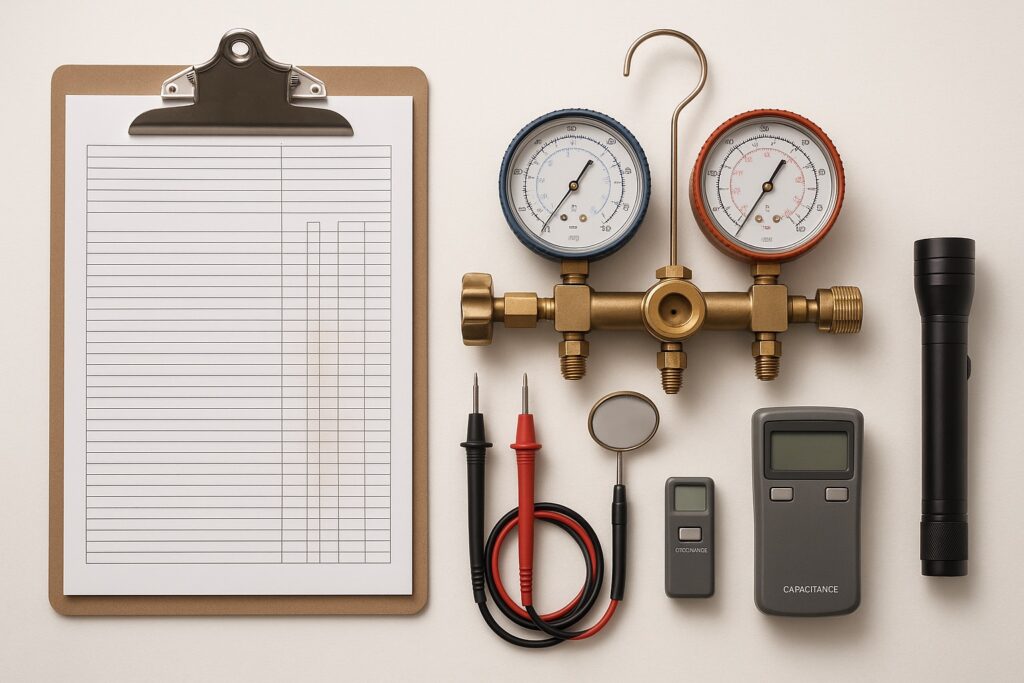
A real fall HVAC tune-up is a cleaning, testing and safety check of your whole HVAC system. The tech tightens and measures the electrical parts, clears the condensate drain, tests the controls and inspects the furnace burner and heat exchanger or the heat pump. For most homes it’s worth it: a Department of Energy review of field studies found AC and heat pump tune-ups save about 5% on energy, and the CDC recommends having gas heating serviced every year.
Timing matters here. Austin’s average first freeze lands on December 1, but cold fronts in Central Texas don’t check the calendar. Here’s what good HVAC maintenance should cover in fall, what it costs nationally and when to book it.
What does HVAC maintenance include? The core checklist
HVAC maintenance includes a set of checks every system should get, whatever fuel it runs on. ENERGY STAR lists thermostat settings, tightening electrical connections, measuring voltage and current on motors, lubricating moving parts, inspecting the condensate drain and testing the controls and start cycle. Heating and cooling checks are added on top of that core list.
From the ENERGY STAR maintenance checklist:
- Thermostat. Settings that keep you comfortable at home and save money while you’re away.
- Electrical connections and motor readings. Loose connections can cause unsafe operation and shorten the life of major parts.
- Lubrication. Dry moving parts add friction and push up your electric use.
- Condensate drain. A plugged drain can cause water damage and raise indoor humidity.
- Controls and start cycle. The tech watches the system start, run and shut off the way it should.
ACCA, the national contractors’ association, also publishes ACCA 4 QM, a manufacturer-endorsed set of minimum maintenance tasks. Ask any HVAC service company you call to walk you through its checklist before the visit.
Heating side: furnace and heat pump checks
For a gas furnace, the checklist adds checks of the gas connections, gas pressure, burner combustion and heat exchanger. A dirty burner or a cracked heat exchanger makes the furnace run less safely and less efficiently. ACCA’s standard also lists combustion analysis as a key furnace task.
A heat pump heats and cools with the same outdoor unit, so it never really gets an off season. Its fall visit covers the electrical and refrigerant side plus the backup heat strips and relays that carry the house through a hard freeze.
Cooling side: coils, refrigerant and air flow
On the cooling side, the same checklist calls for cleaning the evaporator and condenser coils, checking the refrigerant level and adjusting blower parts for proper air flow. It warns that airflow problems can cut efficiency by up to 15 percent. These aren’t rare faults. The DOE review found low airflow in more than half of the systems studied in every region, and refrigerant undercharge in 29% to 78% of systems across studies.
When to schedule a tune-up before a Central Texas freeze
Schedule a fall tune-up in October or early November. The National Weather Service Austin climate summary puts the average first freeze at December 1, based on 1991 to 2020 records. The earliest first freeze on record came on October 26, 1924, so an early front can catch an unchecked furnace. In Buda, our winter prep guide for older and newer Buda homes covers what each type of house needs.
ENERGY STAR’s general advice is to check cooling in spring and heating in fall, before contractors get busy. Central Texas bends that rule. NWS normals keep daily highs above 90 degrees until September 23, so by October your AC has just finished its hardest stretch while the heating side has sat idle since late winter. A fall visit can cover both.
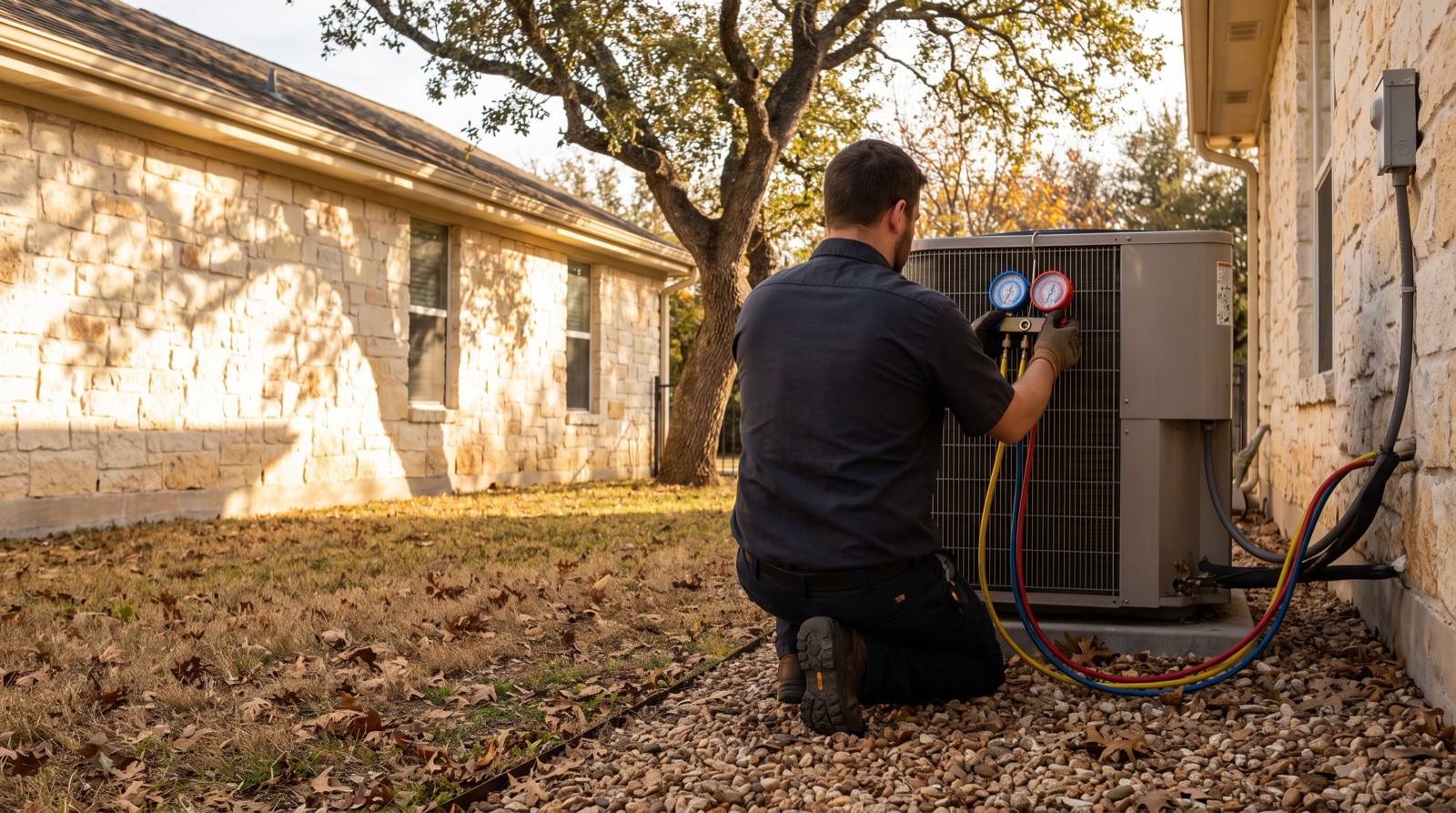
Your neighborhood matters too. Camp Mabry, Austin’s official station, averages about 12 days a year below freezing. Austin Bergstrom airport, in a low-lying spot in the Onion Creek basin, averages 33, and NWS notes clear winter nights can run 10 degrees colder there. Some freezes are serious: Winter Storm Uri dropped 6.4 inches of snow on both Austin stations on February 14 to 15, 2021.
What the Cool Kings winter checkup covers on your HVAC system
The Cool Kings winter checkup follows the ENERGY STAR playbook, with heating and heat pump checks built in. The published checklist includes testing your home for carbon monoxide, inspecting the heat exchanger, testing gas pressure and temperature rise, and testing refrigerant levels on heat pumps. Every capacitor and motor gets tested too.
The winter list for a typical HVAC system, from our HVAC maintenance page:
- Carbon monoxide test, heat exchanger inspection and vent piping inspection
- Burner assembly cleaning as needed, gas pressure and temperature rise tests
- Electrical motor and amp draw tests, plus every capacitor
- Heating elements and relays, heat pump refrigerant levels and condenser coil cleaning
- Condensate drain, blower assembly, air filters and the central air duct for organic growth
Capacitor testing earns its spot. Carrier notes a tune-up lets a tech catch a capacitor drifting out of range before it fails, and our earlier post shows what a failing capacitor looks like. If you have a concern, tell the tech up front so the visit covers it.
Is an HVAC tune-up worth it for energy and safety?
Yes, an HVAC tune-up is worth it for most homes, because regular HVAC maintenance pays back in energy use, equipment life and safety. A DOE review of field studies put the energy savings from tuning up air conditioners and heat pumps at about 5%. ENERGY STAR adds that faulty electrical connections and dirty coils shorten the life of major parts.
Bryant, a major equipment maker, is honest about the limits: there’s no reliable universal percentage for what one home will save, since results depend on the system’s age and condition. A neglected system with years of wear and tear has more to gain than one on regular maintenance.
Safety is the bigger reason for a fall visit if you heat with gas. The CDC advises having your heating system, water heater and other gas burning appliances serviced by a qualified technician every year. It reports that more than 400 Americans die each year from unintentional carbon monoxide poisoning not linked to fires, and more than 14,000 are hospitalized.
Bryant also says annual maintenance helps protect manufacturer warranties, so read your warranty terms and keep service records.
AC tune-up cost and what moves the price
An AC tune-up usually costs $75 to $200, according to Bryant, and a typical furnace tune-up runs $80 to $250. Trane puts an annual air conditioner maintenance visit at $120 to $350. National ranges, not quotes. Local labor rates, company overhead, system type and how much the visit covers all move the number.
A heat pump, a dual fuel system or equipment that’s hard to reach in an attic takes longer. Repairs the tech finds, like a worn capacitor or a clogged drain, are usually priced separately. Seasonal specials and standard visits can both be good value, so compare checklists, not just prices.
Preventative maintenance you can safely do yourself
Preventative maintenance at home comes down to a few safe jobs: change or check the air filters, test the thermostat in heat mode, clear the outdoor unit and test your carbon monoxide alarms. A dirty filter can raise energy costs and damage equipment, leading to early failure, according to ENERGY STAR.
- Air filters. Check them monthly for better air flow and indoor air quality. Here’s how to pick and change an air filter.
- Thermostat. Switch to Heat on a cool evening and confirm warm air comes out within a few minutes.
- Outdoor unit. Rake leaves and pull weeds away from the cabinet. Look, don’t open.
- Carbon monoxide alarms. CPSC recommends alarms with battery power or backup on every level of the home and outside sleeping areas.
Stop there. Don’t open the furnace burner compartment, touch gas valves, open electrical panels or handle refrigerant. In Texas, contractors who install, repair or maintain heating and air conditioning systems must hold a TDLR license. Cool Kings holds license TACLB00074401E.
Fall tune-up questions we hear in Buda and Kyle
How often should I schedule HVAC maintenance in Central Texas?
Plan on a professional check before each season. ENERGY STAR suggests the cooling system in spring and the heating system in fall. A heat pump does both jobs with one outdoor unit, so spring and fall visits make sense. With a gas furnace and central AC, a fall visit that covers both sides is a reasonable middle ground.
How long does an HVAC tune-up take?
Bryant says most AC tune-ups take about 60 to 90 minutes, and a full furnace tune-up generally takes one to two hours. Plan on the longer end for a visit that checks heating and cooling. Repairs found during the visit can add time.
Can I do my own HVAC tune-up?
You can handle filters, thermostat checks and clearing debris around the outdoor unit. The rest belongs to a licensed HVAC professional. Checking gas pressure and combustion, inspecting a heat exchanger and measuring refrigerant charge take training and tools. Texas also requires a TDLR license for anyone paid to maintain HVAC systems.
What happens if I skip a year of HVAC maintenance?
Usually nothing dramatic right away. ENERGY STAR notes that dirty coils, a wrong refrigerant charge and loose electrical connections all cost energy and shorten the life of HVAC equipment. On a gas furnace, the CDC still advises yearly service to catch carbon monoxide risks.
Is a fall tune-up different from AC maintenance?
Yes. Standard AC maintenance focuses on coils, refrigerant, the condensate drain and electrical parts. A fall tune-up adds the heating checks: gas connections and pressure, burner combustion, the heat exchanger and carbon monoxide testing on a furnace, or backup heat strips and relays on a heat pump.
If you’d like your HVAC system checked before the first cold front, call us at (512) 318-7212 or request service online. Cool Kings is a father-son team, Terry and Corey Lutrick, serving Buda, Kyle and the Austin area since 2015, and we offer same-day service during business hours. We’ll walk you through the checklist, tell you straight what we find and help you book your fall tune-up before the freeze.
Get a Quote
From Our Blog