
R-454B and the R-410A Phase-Down: What It Means If Your AC Breaks in 2026
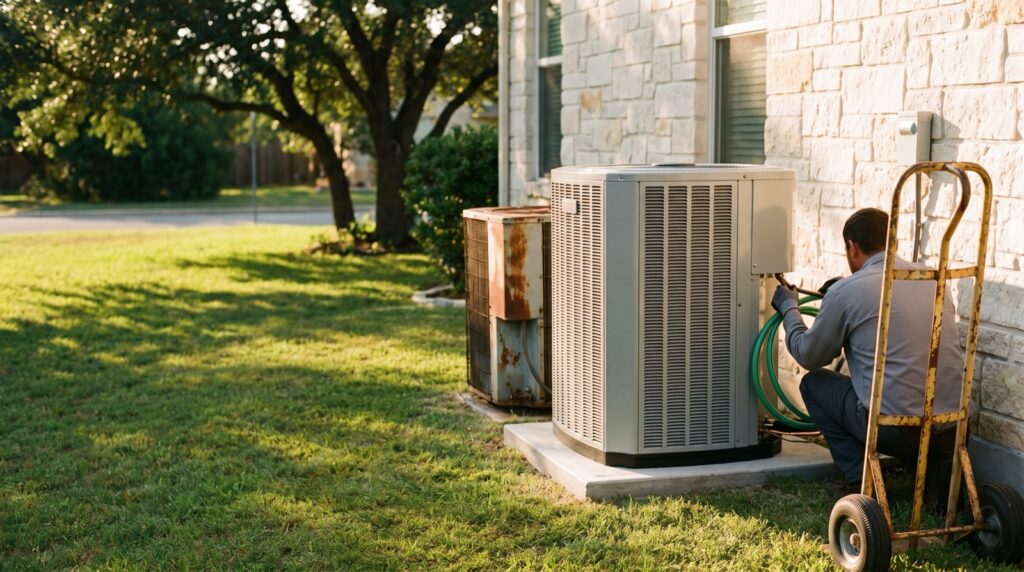
If your R-410A air conditioner breaks in 2026, you can still have it repaired. Repairing an R-410A system is still the right call when it’s under about 10 years old and the problem is a single part. Replacing it with an R-454B system makes more sense once it’s older, needs a compressor or coil, or keeps leaking refrigerant.
What changed is new equipment. Carrier says most new residential HVAC equipment built today is designed for R-454B refrigerant, and Johnson Controls, the company behind York, picked R-454B for all of its ducted home systems.
What the R-410A phase-down actually requires
The R-410A phase-down bars new home air conditioning and heat pump systems from using refrigerants with a global warming potential (GWP) above 700, starting January 1, 2025. R-410A has a GWP of 2,088, according to Carrier. Existing R-410A systems are not affected, and EPA says they can be used and repaired for their useful life.
EPA’s current restrictions table for residential air conditioning and heat pumps has one exception for homeowners: a system whose specified components were all manufactured or imported before January 1, 2025, has no installation deadline. R-410A components built after that date can still be made, but they must be labeled for servicing existing equipment only.
Why you may have heard January 1, 2026
Earlier versions of the rule allowed pre-2025 R-410A equipment to be installed only until January 1, 2026. EPA removed that cutoff in a rule finalized in May 2026, so older articles still quote the 2026 date. A brand-new R-410A system now has to come from equipment built before 2025.
The longer story is supply. The AIM Act directs EPA to cut HFC production and consumption 85 percent by 2036. Allowed production dropped to 60 percent of the historic baseline in 2024 and falls to 30 percent in 2029 (EPA, 2023). EPA says the availability of HFCs and components may lessen over time, though when new R-22 production ended in 2020, reclaimed R-22 kept serving existing systems.
What R-454B refrigerant is and what A2L means for your home
R-454B refrigerant is a blend of 68.9 percent R-32 and 31.1 percent R-1234yf with a GWP of 466, about 75 percent lower than R-410A, according to Carrier. ASHRAE classifies R-454B as A2L, which means lower toxicity and mild flammability. R-454B runs at pressures close to R-410A, but it is not a drop-in replacement.
“Mildly flammable” sounds worse than it is. Johnson Controls notes that A2L refrigerants have a high minimum ignition energy and typically need an open flame or another high-energy source to ignite. The safety standard UL 60335-2-40 (3rd edition or later) calls in most cases for factory-installed leak sensors. Carrier describes its version as a detection system that turns on a fan to disperse leaked refrigerant.
The environmental impact is the reason for the switch, and for you most changes sit behind the panels. R-454B equipment should be installed and serviced by an HVAC tech trained on A2L systems, and Carrier says the electronic tools used must be verified spark-proof. York made the same move: Johnson Controls selected R-454B to replace R-410A in all of its ducted residential and light commercial products.
Can you still repair an R-410A air conditioner?
Yes. EPA says homeowners can maintain and repair R-410A systems throughout their useful life, including replacing a failed condensing unit or indoor coil with a similar R-410A component. The catch is that replacing the condensing unit and indoor coil together counts as a new system under EPA rules, even when the old refrigerant lines stay.
Most everyday HVAC repairs have nothing to do with AC refrigerant. A failed capacitor, contactor, fan motor or thermostat gets fixed as usual. If your outdoor unit hums but won’t start, a bad AC capacitor is one of the less expensive things it could be.
Repairing a leak and recharging with R-410A is legal, but every recharge draws on a supply EPA is phasing down. If your Buda or Kyle home was built or got its HVAC system between 2010 and 2024, it most likely runs on R-410A, since Johnson Controls notes production of new R-22 equipment ended in 2010.
Why an R-454B system needs a new indoor coil
An R-454B system needs an indoor coil built for R-454B, because the refrigerant in the indoor coil has to match the outdoor unit. Carrier’s equipment FAQ says full furnace coils aren’t interchangeable between R-410A and R-454B, and Johnson Controls says a system designed for R-410A cannot be converted to R-454B.
So an R-454B upgrade is never just a new outdoor unit. In many Central Texas homes the indoor coil sits on the furnace in the attic or garage, and that’s typically where the leak sensor goes too.
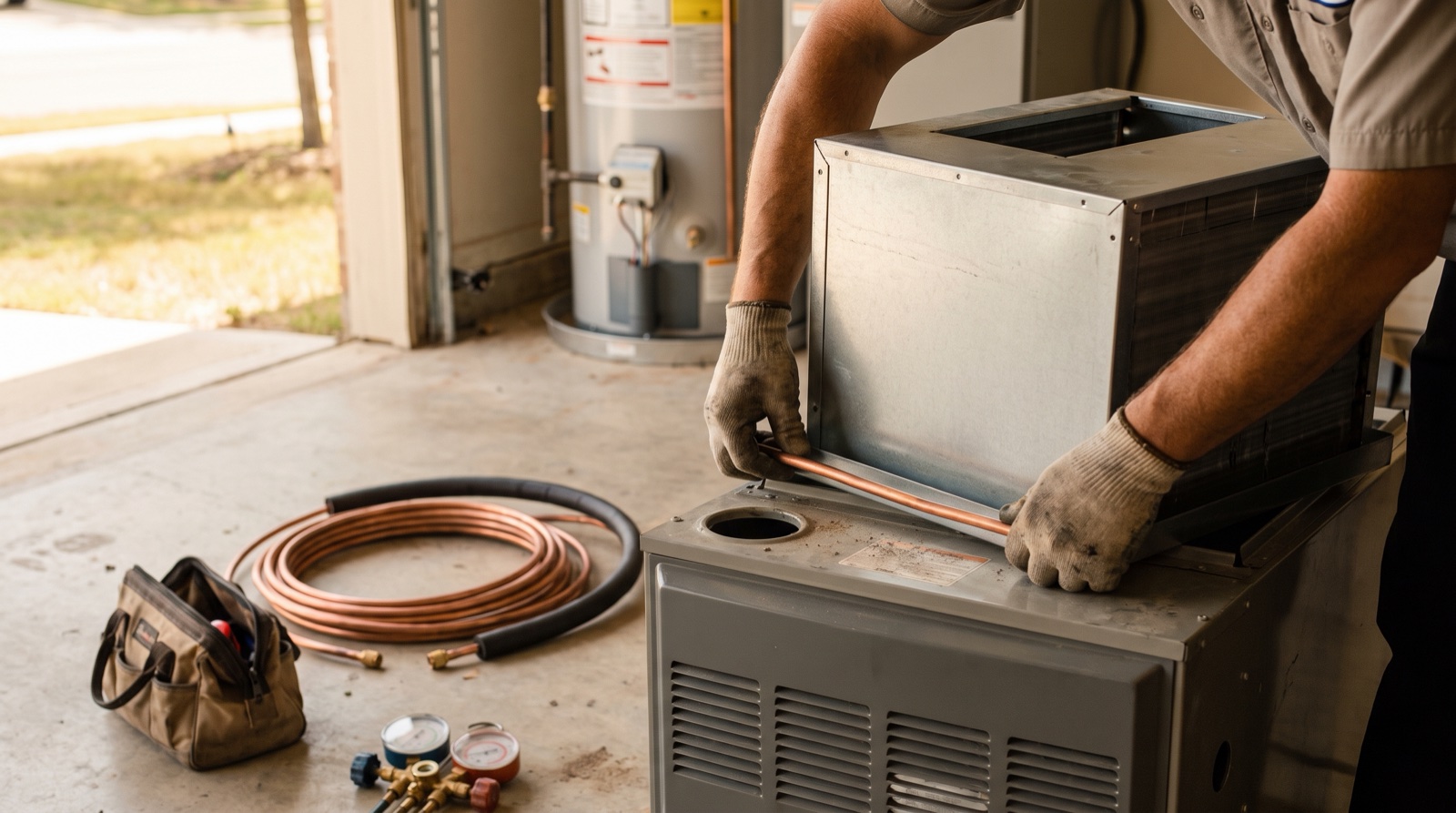
The refrigerant line set is different. Carrier says line sets can be reused as long as they meet local building codes, because R-454B uses the same POE oil as R-410A. A damaged line set still gets replaced, which adds parts and labor.
Repair or replace: how to decide on an R-410A system
Repair your R-410A AC if it’s under about 10 years old, the failure is a single part and it has no history of refrigerant leaks. Replace it with an R-454B system if it’s past 10 years, needs a compressor or coil, or keeps losing refrigerant. EPA lists component availability, energy efficiency and total maintenance costs as the factors to weigh.
- Age. ENERGY STAR suggests considering replacement once an air conditioner or heat pump is more than 10 years old. Correctly installed ENERGY STAR units can save up to 20 percent on heating and cooling costs.
- What failed. Electrical parts are usually worth fixing; a dead compressor on an older unit usually isn’t.
- Leak history. A system that needs refrigerant every summer has a leak, and each recharge adds to the bill.
- The half-system trap. If the outdoor unit and indoor coil both need replacing, EPA treats it as a new system, so make it a matched R-454B system.
- Comfort. ENERGY STAR also flags rooms that are too hot or cold, humidity problems and noisy operation.
Long Central Texas cooling seasons make efficiency count. If the answer points to replacement, a properly sized HVAC installation with matched indoor and outdoor equipment does more for comfort than any single repair. A fall tune-up is a good time to get an honest read on age, coil condition and refrigerant charge before next summer.
What you can safely check before calling a tech
The data plate on your outdoor unit lists the refrigerant type. Check that the thermostat is set to Cool and the filter is clean. If the AC breaker tripped, reset it once. If it trips again, leave it off.
Stop there. Don’t open panels or add refrigerant yourself. Under EPA’s Section 608 rules, only certified technicians can buy refrigerant in cylinders, and Texas requires a TDLR license for air conditioning repair. Cool Kings holds license TACLB00074401E.
What an R-454B replacement costs and why
A new central air conditioner typically costs $3,000 to $15,000 or more installed, according to Carrier. Carrier notes that range doesn’t include a new evaporator coil, a furnace or ductwork changes. Because an R-454B outdoor unit needs a matching R-454B coil, plan on the coil as part of the job, not a surprise add-on.
Carrier names unit size, SEER2 efficiency, home size and installation complexity as the main price drivers. An R-454B changeover adds a few more:
- Indoor equipment: a matched coil, or a new air handler or furnace if yours is near the end.
- Line set condition: reusing a sound line set saves money, while replacing one adds labor.
- Heat pumps vs. AC: swapping an AC and furnace for a heat pump changes the scope.
Don’t count on the federal tax credit. The IRS says the energy efficient home improvement credit covers improvements made through December 31, 2025, so 2026 installs don’t qualify. If timing is tight, ask about financing options.
R-454B questions we hear in Buda and Kyle
Is R-410A being banned?
Not for existing systems. Since January 1, 2025, EPA rules bar new home AC and heat pump systems from using refrigerants with a GWP above 700, which rules out R-410A in new equipment. You can keep using and repairing an R-410A system for its useful life, and R-410A parts are still made for service.
Can you put R-454B in an R-410A system?
No. Carrier and Johnson Controls both say R-454B is not a drop-in replacement, and Johnson Controls notes that charging an R-410A system with R-454B is prohibited by codes and safety standards. R-410A equipment was designed for a nonflammable A1 refrigerant and lacks the leak sensors R-454B systems carry.
Is R-454B safe to have in my home?
Yes, in equipment designed for it and installed by a trained tech. R-454B is mildly flammable (A2L), but Johnson Controls notes A2L refrigerants typically need an open flame or other high-energy source to ignite. Systems built to UL 60335-2-40 use factory-installed sensors that detect a leak and trigger a response, such as running a fan to disperse the refrigerant.
Can anyone buy R-454B refrigerant?
No. Under EPA’s Section 608 rules, only certified technicians, or employers of certified technicians, can buy refrigerant in cylinders, and that covers substitute refrigerants like R-410A and R-454B. Topping off a leaking system isn’t a fix anyway, because the refrigerant just leaks out again.
What are the disadvantages of R-454B refrigerant?
The main tradeoffs are cost and compatibility. R-454B can’t go into existing R-410A equipment, so switching means a matching outdoor unit and indoor coil. Its mild flammability calls for leak sensors, A2L-rated tools and trained installers. Carrier says SEER2 ratings are similar to R-410A equipment, so you aren’t giving up efficiency.
Not sure your R-410A system is worth fixing? Call us at (512) 318-7212 or request service on our website for a straight answer. Cool Kings is a father-son team, Terry and Corey Lutrick, working out of Buda since 2015, with same-day service during business hours. If a repair makes sense, we’ll fix it. If it’s time, we’ll walk you through your options for a new York system.
Get a Quote
From Our Blog