
Carbon Monoxide and the First Cold Night: Furnace Safety Checks for Texas Homes
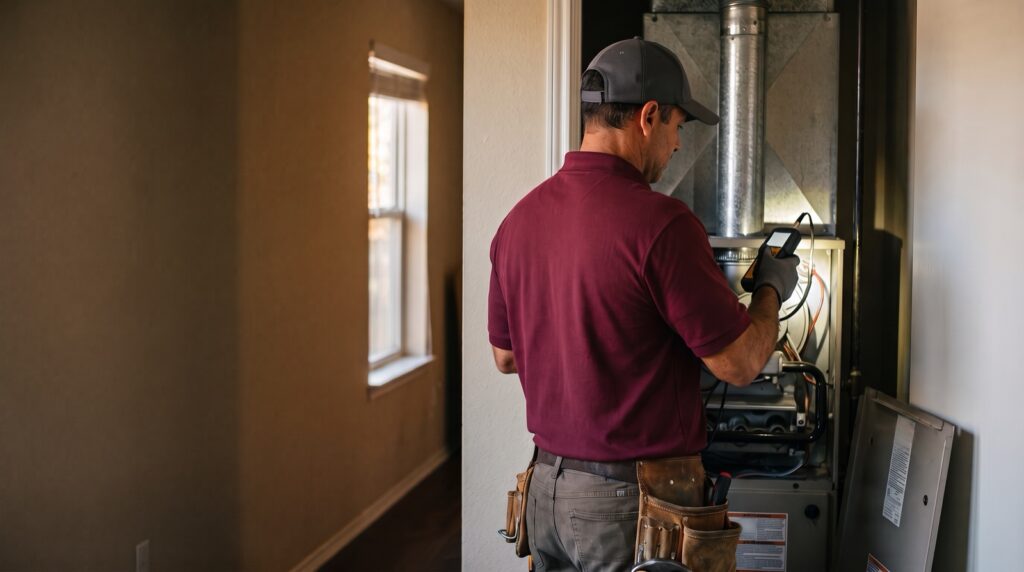
Most of the time, you can’t tell by looking or smelling. Carbon monoxide is a colorless, odorless gas, so a working CO alarm is the only reliable way to know your furnace is leaking it. The clues you can catch are soot, a yellow burner flame, rust on the vent pipe and flu-like symptoms that ease when you leave the house.
If a carbon monoxide alarm sounds or anyone in the house feels sick, get everyone outside to fresh air and call 911. In Central Texas, where furnaces sit idle for months, it pays to know the warning signs and book a safety check early.
How can you tell if your furnace is leaking carbon monoxide?
You can tell a furnace may be leaking carbon monoxide from three things: a sounding CO alarm, visible clues around the furnace and its vent, and symptoms in the people at home. Because carbon monoxide has no color or smell, the U.S. Fire Administration warns people may not know they’re exposed. Only an alarm measures it.
Signs of carbon monoxide leaks around the furnace
The Consumer Product Safety Commission and the Minnesota Department of Health list these clues of a CO problem around fuel-burning appliances:
- A yellow or orange burner flame. A healthy burner flame burns blue. Texas Gas Service lists a yellow flame as a warning sign too.
- Soot or black streaks around vents, flues or burner access openings.
- Rust or water streaks on the vent pipe.
- A loose or disconnected vent connection, or a loose or missing furnace panel.
- Extra moisture on the inside of your windows.
- A system that can’t heat the house or runs nonstop, or an unfamiliar or burning odor.
The CPSC also warns about clues you can’t see: internal damage, improper burner adjustments and hidden blockage in a flue. Only a trained technician can find those. Don’t judge by stale air or poor indoor air quality, since carbon monoxide has no odor.
Symptoms of carbon monoxide poisoning
The CDC lists headache, dizziness, weakness, upset stomach, vomiting, chest pain and confusion as the most common symptoms of carbon monoxide poisoning. The CPSC describes early symptoms as like the flu, but without the fever, and notes a telling pattern: symptoms that lessen or disappear when you’re away from home.
Each year, more than 400 Americans die from unintentional CO poisoning not linked to fires, and more than 100,000 visit an emergency department (CDC). We’re a heating company, not a medical source, so if anyone has these symptoms, get outside and call 911.
What to do if your carbon monoxide alarm sounds
When a carbon monoxide alarm sounds, get everyone outside to fresh air right away and call 911 from outside. The CPSC says not to go back in until emergency responders give you permission. Don’t stay inside to open windows or shut things off, because the CPSC warns you could lose consciousness if you stay.
NFPA adds that you should account for everyone and stay outside until emergency personnel say it’s safe. A separate trouble signal is different, and NFPA says to check for a low battery first. Once responders clear the house, leave the furnace off until a licensed tech finds the cause.
How a gas furnace can produce carbon monoxide
A gas furnace makes CO when fuel burns incompletely, which NFPA says is how carbon monoxide is produced, and that CO reaches your living space when exhaust can’t leave through the vent. The usual culprits are a cracked heat exchanger, a blocked or disconnected flue and dirty or misadjusted burners.
Cracked heat exchanger
The heat exchanger is the metal chamber that keeps burner exhaust separate from the air your blower sends through the house. ENERGY STAR notes that a dirty burner or cracked heat exchanger causes improper burner operation, which makes the system run less safely. A crack can hide deep inside the cabinet, out of a homeowner’s view.
Blocked or disconnected venting
The flue pipe carries exhaust outdoors. The CPSC says an inspector should check flues for blockages, corrosion, disconnections and loose connections. During Winter Storm Uri in February 2021, the Texas Department of State Health Services confirmed 19 fatal CO poisonings, with causes that included generators, grills, vehicles and ice obstructing vents in gas heating equipment.
Incomplete combustion at the burners
Burners need the right mix of gas and air to burn clean and blue. Dirt, a misadjusted burner or the wrong gas pressure can throw that off, and that’s when a lazy yellow flame or soot shows up. If your unit is also struggling to light, see our guide to a furnace that blows cold air or won’t light.
Why idle Texas furnaces need a check before the first cold night
Idle Texas furnaces need a safety check before the first cold night because a furnace in Central Texas sits unused most of the year, and problems from last winter or the off season stay hidden until the burners fire. NFPA recommends a professional inspection of fuel-burning heating equipment every year before cold weather sets in.
Austin’s Camp Mabry station averages 3,290 cooling degree days a year against 1,442 heating degree days, based on NOAA’s 1991 to 2020 climate normals. The same normals put the median first freeze at December 3, with 11.9 nights a year at 32°F or colder. In Buda, Kyle and the rest of Hays County, that means months of AC, then a sudden switch to heat when a front rolls in.
Schedule the check before the first hard cold front, not the night you need the heat. Fall furnace maintenance fits into a regular HVAC maintenance visit.
Where to put carbon monoxide detectors and how to test them
Carbon monoxide detectors belong on every level of your home and in a central spot outside each sleeping area, according to the CPSC, NFPA and the U.S. Fire Administration. Use battery-operated alarms or plug-in alarms with battery backup, test them monthly and replace them on the schedule in the manufacturer’s instructions.
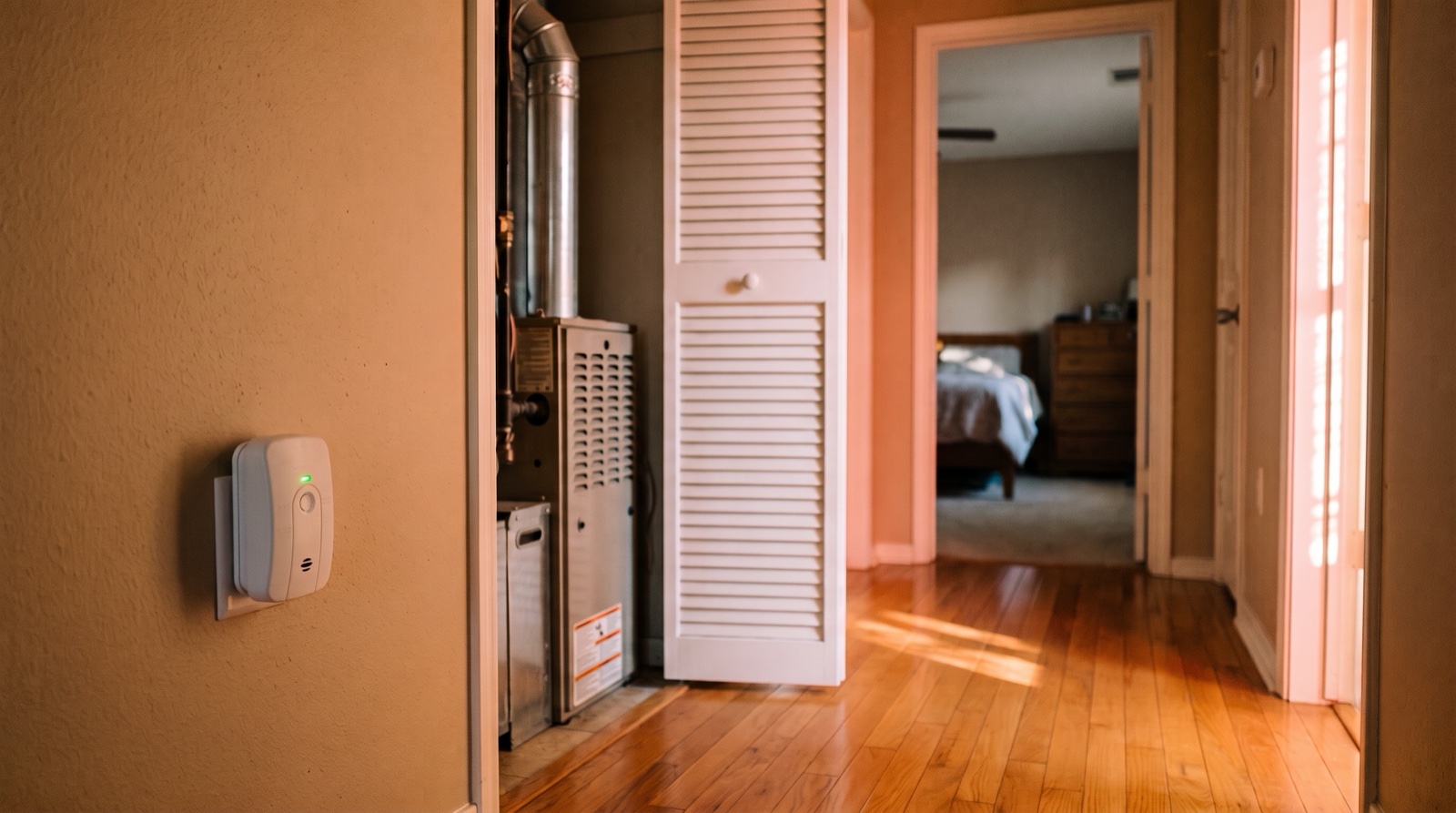
- Outside every sleeping area. The CPSC recommends an alarm in the hallway near the bedrooms.
- Interconnected if possible. NFPA says when one sounds, they all sound.
- Listed to the current UL 2034 standard (CPSC) and mounted at the height the manufacturer gives.
- Tested monthly with the test button (NFPA).
The CPSC says an alarm is no substitute for proper installation, use and upkeep of the appliances that can produce CO. Alarms are built to sound before CO reaches life-threatening levels.
What a furnace safety check covers before any furnace repair
A furnace safety check covers the parts that control carbon monoxide. ENERGY STAR says a heating check should include gas connections, gas pressure, burner combustion and the heat exchanger, and the CPSC adds the chimneys, flues and vents that carry exhaust outdoors.
A thorough visit includes a combustion analysis, where the tech samples the exhaust with an analyzer to read how cleanly the burners run, including the CO level. The tech also checks the flame, looks for cracks and confirms the flue is connected and clear. If anything looks wrong, schedule furnace and heating repair before the system runs again. In Texas, heating contractors need a TDLR license, and Cool Kings holds license TACLB00074401E.
What you can safely check yourself
- Test every CO alarm and replace dead batteries.
- Swap a dirty filter and keep the furnace closet clear.
- Look, without touching, at the visible vent pipe for rust, gaps or a loose joint.
Stop there. Don’t remove burner panels or adjust the gas valve. The CPSC warns never to service combustion appliances without proper knowledge, skills and tools. If you spot soot, a yellow flame or a damaged vent, switch the system off at the thermostat and call for service.
Carbon monoxide questions we hear in Buda and Kyle
What are two warning signs of carbon monoxide in a house?
The two clearest warning signs are a CO alarm going off and flu-like symptoms, such as headache, dizziness or nausea, that ease when you leave the house. The CPSC also lists visible clues like soot around appliances and moisture inside windows. If the alarm sounds or anyone feels sick, get outside and call 911.
Why would a furnace give off carbon monoxide?
A furnace gives off carbon monoxide when fuel doesn’t burn completely or the exhaust can’t leave the house. Common causes are a cracked heat exchanger, a blocked, corroded or disconnected flue, and dirty or misadjusted burners. That’s why the CPSC recommends an annual inspection by a trained service technician.
How quickly will you know if you have carbon monoxide poisoning?
There’s no reliable timeline, which is why an alarm matters more than how you feel. The CPSC says most people notice no symptoms at low levels, but above 70 ppm headache, fatigue and nausea become more noticeable, and sustained levels above 150 to 200 ppm can cause disorientation, unconsciousness and death. Don’t wait for symptoms to act.
Can a heat pump or electric furnace leak carbon monoxide?
No. A carbon monoxide leak needs burning fuel, and a heat pump or electric furnace doesn’t burn any. You still need CO alarms if your home has a gas water heater, gas range, fireplace or attached garage, because the CDC and CPSC list those appliances and vehicles among common sources of carbon monoxide.
How often should a gas furnace be inspected?
Once a year. The CPSC recommends having the heating system, including chimneys and vents, inspected and serviced annually by a trained service technician, and NFPA says to do it before cold weather sets in. Around Buda and Kyle, that means fall, ahead of the median first freeze in early December.
If your CO alarm has gone off, call 911 first. For a furnace that hasn’t run since last winter, or a yellow flame or soot you just noticed, call us at (512) 318-7212 or request service online. Cool Kings is a father-son team, Terry and Corey Lutrick, working out of Buda since 2015, with same-day service during business hours. We’ll give you a straight answer and handle any heating repair in Buda and Kyle before the first cold night.
Get a Quote
From Our Blog